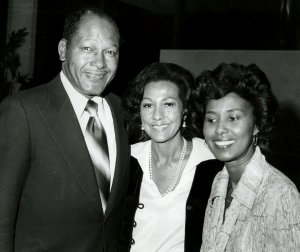
Origin- In 1982, popular long time LA mayor Tom Bradley ran for California governor on the Democratic ticket. Polls prior to election night had him leading by 12 points, yet he lost by one percent.
Before the election, opposing campaign manager Bill Roberts predicted Bradley's numbers were inflated because voters gave inaccurate responses out of fear of appearing racist to pollsters. He was forced to resign over his comments.
Other examples- The effect was seen throughout the 1980s
Douglas Wilder had a double digit lead in polls for the Virginia Senate race only to win by a point. The same was true for David Dinkins when he defeated Rudy Giuliani in 1989 for NYC mayor.
In fact, many pollsters maintain that the only time there is a double digit swing between polls and results is when a minority candidate is involved, and the Bradley effect is its explanation.
Which brings us to New Hampshire.
Every poll (save one) had Barack Obama leading Hillary Clinton by 8- 12 points heading into the election, yet he lost by three. That night, I thought about the Bradley effect, but dismissed it because there was no evidence of it in Iowa. And if there is any place whiter than New Hampshire, it's Iowa.
But then I remembered that Iowa does not have a primary, but a caucus. In a caucus, voters gather in a large room and publicize whom they support by gathering in groups. So, a caucus is really nothing more than a poll on a larger scale. Instead of having to impress a pollster, voters are faced with family, friends and neighbors.
The Bradley effect may have been in full force that night, but to Obama's benefit.
When voters stepped into the privacy of the voting booth, things changed. To me, this is as good an explanation as any as to why New Hampshire polls (even ones taken after Hillary's "breakdown") were so off.
Thursday, January 10, 2008
Political Dictionary: Bradley Effect


Tuesday, July 17, 2007
Political Dictionary: Sister Souljah Moment

Sister Souljah Moment- (n.) term for when a political candidate speaks out against a group/ figure that is part of his/ her base to show moderation and independence.
Origin- In 1992, during the LA riots, African American radio personality Sister Souljah said:
"If Black people kill Black people every day, why not have a week and kill white people?"
Presidential candidate Bill Clinton might have been expected to excuse her comments as he was courting the black- American vote, which is essential to win the Democratic nomination for president. Instead he criticized her:
"If you took the words ‘white’ and ‘black’ and you reversed them, you might think [KKK leader] David Duke was giving that speech."
Clinton was roundly criticized by some of the party's black leadership, but the comment showed him as moderate, tough on crime, and not influenced by "special interests."
Examples-
In his 2000 campaign for the Republican nomination, John McCain called Jerry Fallwell and Pat Robertson "agents of intolerance." Fallwell and Robertson were leaders of the Evangelical wing of the Republican party. McCain lost the nomination, and unsuccessfully sought Fallwell's support in his campaign for 2008.
In his current campaign, Barack Obama has been seen as having several Sister Souljah Moments:
He called for an inquiry into DA Mike Nifong's dealing of the Duke Lacrosse case
He called for teacher accountability in a speech before the second largest teachers union
He said that his daughters should not be entitled to affirmative action when applying to college, because the program should take greater account of whether a child is brought up in poverty, rather than race.