Chistopher Hitchens on what turned out to be a great day for a conflicted city. (Slate)
Paul Krugman treads through some of the disingenuous reactions to Obama's stimulus plan. (NY Times)
In a long overdue move, auto emission standards are on the rise, thanks to President Obama. (NY Times)
Alberto Gonzales doesn't think the new administration will prosecute him. (Huffington Post)
Just before their new album drops, the E Street Band reflects on the Boss himself, Bruce Springsteen. (Rolling Stone)
Showing posts with label Christopher Hitchens. Show all posts
Showing posts with label Christopher Hitchens. Show all posts
Monday, January 26, 2009
Afternoon Links


Monday, December 1, 2008
Mafia Wisdom
On Thanksgiving, I finally checked off a big empty slot on my Man Card by watching the Godfather II. (I know... I know...)
One of the most famous lines from that film is particularly appropriate to today's political news, as Democrats debate the merits of Secretary of State Hillary Clinton, and wonder why she was tapped for the spot.
If you've seen the movie, you probably already know where I'm headed: Michael talks with Frankie Pentangeli about staying friendly with Hyman Roth, the man who tried to have him killed.
My father taught me many things here -- he taught me in this room... He taught me -- keep your friends close but your enemies closer.Now, this isn't to suggest that there's malice between the President- elect and his future Secretary of State, I don't mean to apply the thought in that context.
I think there's a different kind of wisdom here, and there are many reasons why picking Hillary Clinton is ultimately an excellent decision.
 There is the typical reasoning for the choice: President Obama will have to devote most of his time and energy to the economy, but he doesn't want to snub foreign leaders as he rebuilds our alliances and reputation. A visit from Secretary Clinton will be a great substitute for Air Force One, and she'll garner respect and media attention wherever she goes. Her celebrity will go a long way on the international scene.
However, I suspect that Hillary would have been picked even if the economy was in better shape.
 The reason combines the Godfather's wisdom with the lessons of Dorris Kearns Goodwin's Team of Rivals, a book Obama cited as one of his favorites during the campaign. I read it a while back (it only took me an entire summer to get through). It details the way Abraham Lincoln filled his cabinet with the men who ran against him in a bitter battle for the Republican nomination.
These men (William Seward, Salmon Chase, et. al) viewed Lincoln as too green and backwoods to lead at such a calamitous time. But, as he'd done all his life, Lincoln eventually won them over and brought them into his fold.
This is shrewd for (at least) two reasons:
First, your opponent is often the most able person for the job. The president gets the heat and the credit, so he has the ultimate incentive to put the absolute best people around him. Putting personal greivances or even mistrust ahead of what would yield the best outcome is unwise, and would seem totally out of character for Obama.
The second is more politically practical. Obama's former rival now has a major stake in his administration. The more people tied to its outcome, the better the administration's chance for success. Think of a snowball rolling down a hill, the more people it picks up the more powerful it becomes.
Hillary and her husband are still a major force, so putting them on the team gets everyone in the party on the same page (they're a huge chunk of snow). And now, when there's a setback, the press can't run to Hillary's office for a dig on the president.
Christopher Hitchens and other out-spoken Hillary bashers complain that the choice undercuts Obama's message of change. In reality, it's just the opposite. It is difficult to remember a more precarious situation for a president- elect than to come to Washington as president after barely securing his own party's nomination, and look through the rolls of the town's top talent and see names clearly alligned with his opponent.
The old politics approach would purge DC of everything Clinton. Instead, the president- elect chooses to embrace his party's best (Rahm Emanuel, Ron Klain and Sen. Clinton, herself) because they are just that. It's a decision full of self- confidence and understanding of what it will take to reshape the country.
As Michael Corleone indicated, keeping your enemies close will allow you to eliminate them. But that doesn't necessitate a bullet, as Lincoln showed they may simply be eliminated as enemies through common interest and a shared destiny.

Monday, March 17, 2008
Hitchens: Why Did I get Iraq Wrong? I didn't.
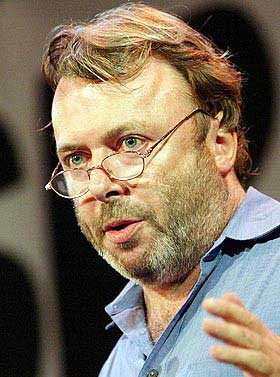
Here's a short excerpt of his well- written, well- argued position:
... But I would nonetheless maintain that this incompetence doesn't condemn the enterprise wholesale. A much-wanted war criminal was put on public trial. The Kurdish and Shiite majority was rescued from the ever-present threat of a renewed genocide. A huge, hideous military and party apparatus, directed at internal repression and external aggression was (perhaps overhastily) dismantled. The largest wetlands in the region, habitat of the historic Marsh Arabs, have been largely recuperated. Huge fresh oilfields have been found, including in formerly oil free Sunni provinces, and some important initial investment in them made. Elections have been held, and the outline of a federal system has been proposed as the only alternative to a) a sectarian despotism and b) a sectarian partition and fragmentation. Not unimportantly, a battlefield defeat has been inflicted on al-Qaida and its surrogates, who (not without some Baathist collaboration) had hoped to constitute the successor regime in a failed state and an imploded society. Further afield, a perfectly defensible case can be made that the Syrian Baathists would not have evacuated Lebanon, nor would the Qaddafi gang have turned over Libya's (much higher than anticipated) stock of WMD if not for the ripple effect of the removal of the region's keystone dictatorship.
... But the thing to remember about Iraq is that all or most choice had already been forfeited. We were already deeply involved in the life-and-death struggle of that country, and March 2003 happens to mark the only time that we ever decided to intervene, after a protracted and open public debate, on the right side and for the right reasons. This must, and still does, count for something.
Subscribe to:
Posts (Atom)