On Feb. 7 I'm going with a friend to see Will Ferrell's one man Broadway show, You're Welcome America, where he plays our 43rd president.
George W. Bush was inaugurated on January 20, 2001. I was 18 years old, and politically aware and interested but not ideologically developed. The vote I cast for Al Gore remains my proudest. Before Bush took the oath of office, I had a conversation with my high school girlfriend's father. He'd voted for Bush, and I told him that after Bush was through the country would be worse off economically and socially. He disagreed.
On this, the last night of the Bush presidency, I want to take a look back at his time in office.
9/11
Just in case the above anecdote makes me seem like a know it all, indulge me one more. After 9/11, my friend and I were sitting in his dorm room watching ex- presidents and dignitaries file into the National Cathedral for a mass marking the tragic event. Gore was on screen and I remarked, "Man, I voted for him, but I'm really glad that he's not president right now. We need Bush in there." He agreed.
Bush's bravado and cowboy style comforted a nation that had its sense of invincibility rocked. He was a man who would punish those responsible and restore order to our world. Check out this SNL clip, where Ferrell plays the president just after 9/11. The cheers and hoots are remarkable and almost startling.
We craved this kind of call- out, we wanted revenge. Seven years later, this clip is more sad than funny. If you'd told the members of SNL's studio audience that night that bin Laden would be on the run and releasing tapes in 2009 I don't think they'd have believed you. I certainly wouldn't have.
But Bush was his best in those early days, even if he didn't actually accomplish anything. I'd argue the two best moments of his presidency came in late 2001:
Here, Bush is confident and well spoken, even eloquent. He's not giving prepared remarks, but reacting to the emotion of the moment and words of workers at Ground Zero.
I don't like George W. Bush, and I hate the New York Yankees. But this was pretty cool--
The Aftermath
Bush executed the War on Terror in a reckless way that was often politically motivated. The Senate's vote for use of force against Iraq was held right before the '02 midterms, which turned it into a political issue.
Dick Cheney executed his "unitary executive" theory, which gave the president new power at the expense of civil liberties and international law. Neo- Cons executed their Iraq- as- Petri dish experiment for American hegemony in the 21st century unfettered, at the expense of American servicemen and women, uncounted civilians and America's alliances.
And the president wasn't curious enough or interested enough or competent enough to stop them.
Iraq
The Iraq War was, as John Kerry famously put it, the wrong war in the wrong place at the wrong time. But with improved security in the country it has become Bush's best chance at lasting achievement, and the only thing that could rescue his name from historians' bottom tier of presidents, where he now seems destined to be remembered. A stable democracy in the heart of the Middle East, and the dismantling of an abhorrent dictator is a potential game changer for our world.
But it was sold under false pretenses and done on the cheap. And when it wasn't working, Bush didn't react. The failures in Iraq can fill books. And so it can never be a source of pride for Bush. But it does have potential.
The Economy
For much of Bush's eight years in office, before the economy collapsed in on itself, the country seemed to be doing quite well economically. Unemployment was stable near historic lows, the stock market routinely broke records, and home ownership was at its highest level ever. However, polls routinely showed that Americans didn't feel good about the economy. People didn't feel good about it because it wasn't working for them. Inequality skyrocketed during the Bush years, to levels that surpassed even the "Roarin' 20s."
Through tax cuts and loop holes corporate earnings and income for the wealthiest individuals were unprecedented. Yet the benefits failed to trickle down to the rest of us. And when inflated housing numbers popped they brought the DOW down too, and Bush's signature economic accomplishments were undone while he still lived in the White House.
The Administration
In Paul Krugman's 2007 book The Conscience of a Liberal the economist distinguishes the Republican party of Eisenhower, Nixon and Bush 41 from that of George W. Bush. Bush 43 emanated from what Krugman calls"movement conservatism," and one of its main tenets is patronage based on loyalty rather than expertise.
That became evident as figures drifted from the administration to companies they were supposed to be regulating and back. It was clear after the utter incompetence of horse breeder turned FEMA director, Michael Brown who still enjoyed George Bush's loyalty even as people suffered through the federal government's incompetence.
Conclusion
Bush's presidency might be best understood through the lens of what's known as the Peter Principle. It holds that in a hierarchy, members are promoted so long as they work competently. Sooner or later they are promoted to a position at which they are no longer competent (their "level of incompetence"), and there they remain.
George Bush rose to a level for which he was simply incompetent.
However, his presidency is not so much a personal failure, I think, as it is a failure of ideology and a corrupt politics. George Bush's disposition and personal character and story made him somewhat of a blank canvas on which movement conservatives could project their vision of government. For eight years we endured that vision.
Now, thanks to that experience, eroding racism and a shift in demographics movement conservatives have turned the Republican party into a mostly regional force. When the party returns to national prominence, we can expect it to look very different.
So perhaps Bush's legacy is that he made today possible. He helped elect the most progressive government since the 1930s. And I firmly believe our country will be better off for it. What's more, he put the country in a place where it was finally ready move past, not so much its racial divisions, but the cultural roils that defined the baby boom generation. Now that our first post- Boomer is in the White House we can close the book on George W. Bush's presidency and that tumultuous age.
So, thank you, George W. Bush.
Monday, January 19, 2009
Thank you, George W. Bush


Wednesday, August 13, 2008
Saturday, July 26, 2008
Debating the Politics of the Dark Knight

At alternet.org, Michael Dudley sees the Dark Knight through the new lens of a post- 9/11 narrative in American politics. From violent but futile interrogations, to an intrusive but ultimately useless surveillance system, to the redemption of prisoners clad in Guantanamo- orange jumpsuits-- Dudley argues the movie's popularity is a sign that America has gotten wise to dangerous tactics of the past 7 years.
He concludes:
"Even in the face of incomprehensible, implacable evil, The Dark Knight reminds us that [principles of law, fairness and justice] are our only anchors, for without them we betray both them and ourselves.Meanwhile, Andrew Klavan of the Wall Street Journal sees things exactly the opposite way:America may still have that chance. At the moment, however, its Constitution has been mauled, and politicians of both parties long ago surrendered their capacities to stop an illegal war and the looting of the nation's wealth. Now, however, The Dark Knight warns against both abandoning our principles out of fear, grief and hatred, as well as abdicating our moral agency to external authorities -- both of which comprised the hallmark moral syndrome of the years following 9/11."
He begins:
A cry for help goes out from a city beleaguered by violence and fear: A beam of light flashed into the night sky, the dark symbol of a bat projected onto the surface of the racing clouds . . .Oh, wait a minute. That's not a bat, actually. In fact, when you trace the outline with your finger, it looks kind of like . . . a "W."
There seems to me no question that the Batman film "The Dark Knight"... is at some level a paean of praise to the fortitude and moral courage that has been shown by George W. Bush in this time of terror and war. Like W, Batman is vilified and despised for confronting terrorists in the only terms they understand. Like W, Batman sometimes has to push the boundaries of civil rights to deal with an emergency, certain that he will re-establish those boundaries when the emergency is past.

Monday, June 16, 2008
He's right... just ask my uncle at the armored humvee plant
Someone sent me this today, but it's a few months old.
The president flexes muscles on the economy, the most important issue to Americans, and assuages fear that spending trillions in Iraq set us back at home:
The fact is the war is great for jobs, just ask Exxon/Mobil, Blackwater and Sunni insurgents.
Tuesday, June 10, 2008
Quote of the Day 6/10
The US Senate Select Committee on Intelligence (finally) released their highly anticipated Phase II of its report on prewar intelligence. Sen. Jay Rockafeller (D-WV) detailed the findings:
"Unfortunately, our Committee has concluded that the Administration made significant claims that were not supported by the intelligence. In making the case for war, the Administration repeatedly presented intelligence as fact when in reality it was unsubstantiated, contradicted, or even non-existent. As a result, the American people were led to believe that the threat from Iraq was much greater than actually existed.
It is my belief that the Bush Administration was fixated on Iraq, and used the 9/11 attacks by al Qa’ida as justification for overthrowing Saddam Hussein. To accomplish this, top Administration officials made repeated statements that falsely linked Iraq and al Qa’ida as a single threat and insinuated that Iraq played a role in 9/11. Sadly, the Bush Administration led the nation into war under false pretenses.
“There is no question we all relied on flawed intelligence. But, there is a fundamental difference between relying on incorrect intelligence and deliberately painting a picture to the American people that you know is not fully accurate..."
Thursday, May 29, 2008
Scotty Shines a Light
Former White House Press Secretary Scott McClellan has been roundly criticized recently by the Bush administration for his new book (Karl Rove even likened him to "a liberal blogger").
You remember McClellen, he was the pudgy, beta- male that briefed the press early in the Iraq war and who (unwittingly, it would seem) lied about Karl Rove and Scooter Libby's involvement in the Valerie Plame debacle. He was pretty much a source of White House disinformation for a couple of years.
A Bush guy from Texas, McClellan came to DC under-prepared and ill-equipped to deal with the tremendous pressure of entrenched Washington neo-cons with their own agenda-- not unlike the president himself.
In his memoir, What Happened, McClellan puts a startlingly fine point on what most of us already know: The administration manipulated the facts surrounding Iraq, terrorism and WMD to get Americans to back a war under false pretenses.
McClellan was such an ardent "Bushie" that his words are even more striking than former administration and military officials that have also spoken out.
Watch McClellan's amazing interview with Today's Meredith Viera, where he details the personal side and professional roles of the president, Vice President Cheney, Secretaries Condi Rice and Don Rumsfeld--
Sunday, May 18, 2008
Olbermann to Bush: Shut the Hell Up!
Keith Olbermann absolutely flew off the handle the other night. He used his closing comments to eviscerate the president for his insensitivity, dishonesty and callousness.
I've been critical of Olbermann on this site before. Parts of this clip bother me, I still think he's quite full of himself. But I respect his passion and sincerity.
As for what he says, I believe that he is factually correct. Bush was led all too happily down a path to unnecessary war by dishonest men like Ahmed Chalabi, Dick Cheney, Don Rumsfeld and other neo- cons. That's what happened.
They cooked evidence, twisted arms, intimidated, fabricated and scared us into Iraq. What's even worse is they had zero discernible plan for the aftermath, and were incompetent at every step of the way in building one as war unfolded.
Wednesday, April 23, 2008
All Work and No Playboy

When informed that the service was paid for out-of-pocket by the soldiers, Rep. Broun pointed out that tax payer money is "used to pay military salaries, so taxpayer money is, in effect, being used to buy these materials."
So Rep. Broun believes he can dictate the purchases of government employees.
Rep. Broun, whose salary is paid by taxpayers, gives an excellent sense of his priorities on the front page of his website. There, you'll find the Broun 4 point test for when he'll take action:
1- Is [the issue] right/ moral?
2- Is it Constitutional?
3- Is it necessary?
4- Is it affordable?
So let's take a look at the Military Honor and Decency Act as Rep. Broun must have:
1- Is this issue right? Well, Rep. Broun obviously thinks so! And that's good enough for me...
2- Is it Constitutional? Clearly! What kind of constitution would let people to buy dirty magazines?
3- Is it necessary? Absolutely.
4- Is it affordable? It'll come at the cost of damage done by stressed out, horn'd up guys with guns... but you bet!
Thanks, Paul Broun, for stopping those who serve our country from buying periodicals that "give prominence to nudity or sexual or excretory activities."
So, as Gawker.com warns, "Cancel that subscription of Deuce Aficionado, Lieutenant."
Monday, April 7, 2008
Quote of the Day 4/7: Approaching normal
"[Recent reductions in violence have left Iraq] approaching normal political and economic life for the average Iraqi.
Political reconciliation is occurring across Iraq at the local, provincial, grassroots level... Sunni and Shi'a chased from their homes by terrorist and sectarian violence are returning. The 'Sons of Iraq' and Awakening movements, where former Sunni insurgents have now joined in the fight against Al Qaeda, continue to grow."
- John McCain on what he sees happening today in Iraq. His presidential bid is largely tied to the stability of the country, and the American public's willingness to stay there for "maybe 100" more years.
Friday, April 4, 2008
Friday's Big Numbers **Updated**
80,000- US jobs cut in March
81%- of respondents say the country is on the wrong track, the highest percentage since CBS/ NY Times began polling in the early 1990s.
4%- of respondents in the same poll say the country is better off now than it was 5 years ago.
37- Barack Obama's bowling score through 7 frames at a Pennsylvania alley.
152- What I bowled last night in the law school playoffs, a personal best.
70,000- number of troops Obama advisor Colin Kahl says should stay in Iraq after 2010, at odds with Obama's stated plan to pull combat troops out within 16 months of taking office. Kahl said his position does not reflect that of the campaign.
$20,000,000- Amount raised in March by Hillary Clinton's campaign for president, $15m coming online.
$40,000,000- Amount raised in March by Barack Obama's campaign for president.
**UPDATE** There's one other "Big Number" that came out today:
$109,200,000- Amount of money earned by Bill and Hillary Clinton since 2000.
Thursday, April 3, 2008
Quote of the Day 4/3: So?
"So?"
- Vice President Dick Cheney being confronted with the statistic that 2/3 of Americans feel the War in Iraq is not worth it. See below...
Wednesday, March 26, 2008
If only...

Someone, like Al Gore.
Mahoney suggested that Democrats could get behind either a Gore/ Clinton or Gore/ Obama ticket. From Gore's point of view, a Gore/ Obama scenario is far more likely as he doesn't get along with the Clintons well anymore, and seems to have more in common with Obama.
Okay, so this probably (definitely) isn't going to happen. But, it raises a good opportunity to talk about the person most qualified to be the next president-- the man that combines Hillary's experience (only not fabricated) and Obama's judgment (only more specific).
Gore is always the smartest person in the room, and he knows it-- and that's always been his biggest problem. Back in 2000, when he rolled his eyes every time George Bush attempted to answer a question, it was the genuine reaction of a guy a foot smarter than his opponent.
A couple of days ago, I posted the speech Barack Obama gave a week before the authorization to invade Iraq. Now, it's time to rehash Gore's. Their conclusions are identical, but the speeches, like the men themselves, are very different.
Where Obama's is short and to the point, Gore's is long and methodical. Obama's is soaring and inspiring, and almost poetic in its delivery. Gore is scientific as he breaks down, point by point, why the war is the wrong decision. It's like a law review article in his precision, perhaps one drafted by Holmes.
Quick reminder: the speech was given on Sept. 23, 2002. At the time President Bush's approval ratings were in the upper 60s, and Al Gore had yet to publicly criticize any move by the president since their divisive 2000 election.
It's long, so here's the link to the transcript, and below are some key excepts.
Contrasting the first Gulf War (which he vigorously supported) with the present proposed action:
... Fifth, President George H. W. Bush purposely waited until after the mid-term elections of 1990 to push for a vote at the beginning of the new Congress in January of 1991. President George W. Bush, by contrast, is pushing for a vote in this Congress immediately before the election. Rather than making efforts to dispel concern at home an abroad about the role of politics in the timing of his policy, the President is publicly taunting Democrats with the political consequences of a "no" vote - even as the Republican National Committee runs pre-packaged advertising based on the same theme -- in keeping with the political strategy clearly described in a White House aide's misplaced computer disk, which advised Republican operatives that their principal game plan for success in the election a few weeks away was to "focus on the war." Vice President Cheney, meanwhile indignantly described suggestions of political motivation "reprehensible." The following week he took his discussion of war strategy to the Rush Limbaugh show.
On preemptive war:
By shifting from his early focus after September 11th on war against terrorism to war against Iraq, the President has manifestly disposed of the sympathy, good will and solidarity compiled by America and transformed it into a sense of deep misgiving and even hostility. In just one year, the President has somehow squandered the international outpouring of sympathy, goodwill and solidarity that followed the attacks of September 11th and converted it into anger and apprehension aimed much more at the United States than at the terrorist network - much as we manage to squander in one year's time the largest budget surpluses in history and convert them into massive fiscal deficits. He has compounded this by asserting a new doctrine - of preemption.
Iraq after invasion:
... Moreover, if we quickly succeed in a war against the weakened and depleted fourth rate military of Iraq and then quickly abandon that nation as President Bush has abandoned Afghanistan after quickly defeating a fifth rate military there, the resulting chaos could easily pose a far greater danger to the United States than we presently face from Saddam.
... When Secretary Rumsfield was asked recently about what our responsibility for restabilizing Iraq would be in an aftermath of an invasion, he said, "that's for the Iraqis to come together and decide."
Concluding:
... What this doctrine does is to destroy the goal of a world in which states consider themselves subject to law, particularly in the matter of standards for the use of violence against each other. That concept would be displaced by the notion that there is no law but the discretion of the President of the United States.

I believe that we can effectively defend ourselves abroad and at home without dimming our principles. Indeed, I believe that our success in defending ourselves depends precisely on not giving up what we stand for.
Monday, March 24, 2008
Obama's 2002 Iraq Speech
A major narrative of the Democratic Primary has been judgment vs. experience. Hillary has touted her eight years as first lady and seven in the Senate as appropriate seasoning for a Commander-in-Chief. Obama, meanwhile, points to his early opposition to the Iraq War as evidence of stronger judgment.
Former President Clinton called Obama's opposition "a fairytale," because in the Senate he didn't act forcefully enough to bring an immediate end to the occupation.
It's common knowledge that Obama spoke out against invading Iraq; however, for many his timing and motivation are unclear. So, below is the text from that speech. It's short and worth reading in full. Below that, is a video of excepts from the speech, including the only 13 seconds that remain from Obama's delivery.
This is from October 2, 2002-- a week before Congress gave President Bush the authority invade Iraq.
It's really quite something.
Good afternoon. Let me begin by saying that although this has been billed as an anti-war rally, I stand before you as someone who is not opposed to war in all circumstances.
The Civil War was one of the bloodiest in history, and yet it was only through the crucible of the sword, the sacrifice of multitudes, that we could begin to perfect this union, and drive the scourge of slavery from our soil. I don’t oppose all wars.
My grandfather signed up for a war the day after Pearl Harbor was bombed, fought in Patton’s army. He saw the dead and dying across the fields of Europe; he heard the stories of fellow troops who first entered Auschwitz and Treblinka. He fought in the name of a larger freedom, part of that arsenal of democracy that triumphed over evil, and he did not fight in vain.
I don’t oppose all wars.
After September 11th, after witnessing the carnage and destruction, the dust and the tears, I supported this Administration’s pledge to hunt down and root out those who would slaughter innocents in the name of intolerance, and I would willingly take up arms myself to prevent such a tragedy from happening again.
I don’t oppose all wars. And I know that in this crowd today, there is no shortage of patriots, or of patriotism. What I am opposed to is a dumb war. What I am opposed to is a rash war. What I am opposed to is the cynical attempt by Richard Perle and Paul Wolfowitz and other arm-chair, weekend warriors in this Administration to shove their own ideological agendas down our throats, irrespective of the costs in lives lost and in hardships borne.
What I am opposed to is the attempt by political hacks like Karl Rove to distract us from a rise in the uninsured, a rise in the poverty rate, a drop in the median income – to distract us from corporate scandals and a stock market that has just gone through the worst month since the Great Depression.
That’s what I’m opposed to. A dumb war. A rash war. A war based not on reason but on passion, not on principle but on politics.
Now let me be clear – I suffer no illusions about Saddam Hussein. He is a brutal man. A ruthless man. A man who butchers his own people to secure his own power. He has repeatedly defied UN resolutions, thwarted UN inspection teams, developed chemical and biological weapons, and coveted nuclear capacity.
He’s a bad guy. The world, and the Iraqi people, would be better off without him.
But I also know that Saddam poses no imminent and direct threat to the United States, or to his neighbors, that the Iraqi economy is in shambles, that the Iraqi military a fraction of its former strength, and that in concert with the international community he can be contained until, in the way of all petty dictators, he falls away into the dustbin of history.
I know that even a successful war against Iraq will require a US occupation of undetermined length, at undetermined cost, with undetermined consequences. I know that an invasion of Iraq without a clear rationale and without strong international support will only fan the flames of the Middle East, and encourage the worst, rather than best, impulses of the Arab world, and strengthen the recruitment arm of al-Qaeda.
I am not opposed to all wars. I’m opposed to dumb wars.
So for those of us who seek a more just and secure world for our children, let us send a clear message to the president today. You want a fight, President Bush? Let’s finish the fight with Bin Laden and al-Qaeda, through effective, coordinated intelligence, and a shutting down of the financial networks that support terrorism, and a homeland security program that involves more than color-coded warnings.
You want a fight, President Bush? Let’s fight to make sure that the UN inspectors can do their work, and that we vigorously enforce a non-proliferation treaty, and that former enemies and current allies like Russia safeguard and ultimately eliminate their stores of nuclear material, and that nations like Pakistan and India never use the terrible weapons already in their possession, and that the arms merchants in our own country stop feeding the countless wars that rage across the globe.
You want a fight, President Bush? Let’s fight to make sure our so-called allies in the Middle East, the Saudis and the Egyptians, stop oppressing their own people, and suppressing dissent, and tolerating corruption and inequality, and mismanaging their economies so that their youth grow up without education, without prospects, without hope, the ready recruits of terrorist cells.
You want a fight, President Bush? Let’s fight to wean ourselves off Middle East oil, through an energy policy that doesn’t simply serve the interests of Exxon and Mobil.
Those are the battles that we need to fight. Those are the battles that we willingly join. The battles against ignorance and intolerance. Corruption and greed. Poverty and despair.
The consequences of war are dire, the sacrifices immeasurable. We may have occasion in our lifetime to once again rise up in defense of our freedom, and pay the wages of war. But we ought not – we will not – travel down that hellish path blindly. Nor should we allow those who would march off and pay the ultimate sacrifice, who would prove the full measure of devotion with their blood, to make such an awful sacrifice in vain.

Monday, March 17, 2008
Hitchens: Why Did I get Iraq Wrong? I didn't.
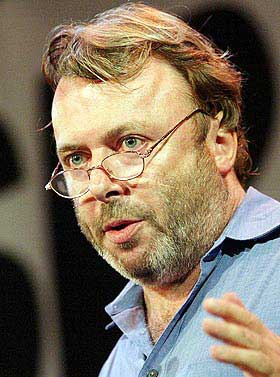
Here's a short excerpt of his well- written, well- argued position:
... But I would nonetheless maintain that this incompetence doesn't condemn the enterprise wholesale. A much-wanted war criminal was put on public trial. The Kurdish and Shiite majority was rescued from the ever-present threat of a renewed genocide. A huge, hideous military and party apparatus, directed at internal repression and external aggression was (perhaps overhastily) dismantled. The largest wetlands in the region, habitat of the historic Marsh Arabs, have been largely recuperated. Huge fresh oilfields have been found, including in formerly oil free Sunni provinces, and some important initial investment in them made. Elections have been held, and the outline of a federal system has been proposed as the only alternative to a) a sectarian despotism and b) a sectarian partition and fragmentation. Not unimportantly, a battlefield defeat has been inflicted on al-Qaida and its surrogates, who (not without some Baathist collaboration) had hoped to constitute the successor regime in a failed state and an imploded society. Further afield, a perfectly defensible case can be made that the Syrian Baathists would not have evacuated Lebanon, nor would the Qaddafi gang have turned over Libya's (much higher than anticipated) stock of WMD if not for the ripple effect of the removal of the region's keystone dictatorship.
... But the thing to remember about Iraq is that all or most choice had already been forfeited. We were already deeply involved in the life-and-death struggle of that country, and March 2003 happens to mark the only time that we ever decided to intervene, after a protracted and open public debate, on the right side and for the right reasons. This must, and still does, count for something.
Monday, November 12, 2007
Quote of the Day 11/12
"There are a lot of Americans (who say), 'Why didn't you go get him?' Well, I'm confident that losing men and women as a result of sniper fire inside of Baghdad would have turned the tide of public opinion very quickly."- Then- Texas Governor George W. Bush on Veteran's Day 1997, in a speech in which he praised his father's decision not to push into Iraq and destroy the Iraqi National Guard during the Persian Gulf War. Bush said that the decision avoided an ugly "guerrilla war."
Apparently, his father agreed with the assessment. Of his son's comments, former President George H.W. Bush said: "I think he got it right." He then referred to Vietnam: "... one guerrilla war in my lifetime was enough."
Sunday, October 14, 2007
Quote of the Day 10/14
"There is no question that America is living a nightmare [in Iraq] with no end in sight... From a catastrophically flawed, unrealistically optimistic war plan, to the administration’s latest surge strategy, this administration has failed to employ and synchronize the political, economic and military power"
- Retired Lt. Gen. Ricardo Sanchez, former commander of US forces (2003-2004) in Iraq in an Interview with Stars and Stripes, a military publication.
Wednesday, September 26, 2007
There's A War?
Ken Burns' and PBS' documentary, The War, is a monumental effort showcasing a nation at war, but in contrast to today, it also shows us to be a nation in peril. In the mammoth fifteen hour project, Burns brilliantly shows the war's experience from America's perspective, mainly focusing on four towns scattered throughout the country. Through Tuesday night, we witness the bond drive, the euphoric feeling of young citizens enlisting and being drafted, battles in the pacific, Africa and Europe, the effort to save resources and the booming military industrial complex that put millions to work. Basically, you see much of what you don't see today.
Chris Meehan wrote an interesting piece regarding Blackwater and other private contractors in Iraq last Monday. It's something that would appear alien in the world Ken Burns has brought to us. Paying ex-soldiers to be soldiers is not exactly a value shared by the men who fought and took the town of Cisterna in the spring of '44. Maintaining a policy of no-bid contracts and worrying about inadequate body-armor would appear treasonous to the families who stayed home between '42-'46, saving bacon fat and empty cans to contribute for the war effort.
MSNBC has an article about the Department of Defense battling with the State Department about private contractors and their role. The problem is that contractors' use are as prevalent among the DoD personnel as it is within State. One might say too little, too late regarding the DoD's efforts to take some hold of the situation, but seeing that we'll be in Iraq for a little while longer (I don't know if that's an under or overstatement), it may still be a good time to take some action.
Meanwhile, we delve deeper into fantasy sports, pray at the alter of celebrity news, and bob our heads to the new jingle remixed off Elvis Presley's great song, Viva Viagra! All this, and more, no doubt, to help us forget that there's a war going on. That young, poor men and immigrants are dying. That, despite official military rules, young women are fighting in fierce combat. And that there may be no clear end in sight.
Monday, September 24, 2007
Operation: BLACKWATER
Private security firm Blackwater USA has been in the news this week for the wrong reasons. Blackwater has been contracted out in Iraq to provide security for US diplomats and civilian construction workers. This is a paramilitary force with little accountability that has taken on the functions of the US military. In her book The End of America, Naomi Wolf points to use of paramilitary forces as a sign that a civilization is on the road to dictatorship.
Now, I don't know about all that. I saw Ms. Wolf on the Daily Show the other night arguing that we've seen 10 such signs hit in the last few years, but I don't understand if she's expecting next November's elections to be mysteriously called off for some reason, or what.
Either way, Blackwater, with its ominous name and logo, does sound like something out of a science fiction movie. And now they're facing some serious charges. About a week ago, Blackwater agents were in a gun battle in downtown Baghdad in which they killed 20 Iraqi civilians. The Iraqi government had been looking to file criminal charges; however, according to US statutes, private security firms, and their 25,000 employees in the country, are immune from prosecution by the Iraqi government.
From CNN.com: Iraqi officials, who claim the shootings were unprovoked, dispute Blackwater's claim that the guards were responding to an attack and said on Saturday they had a videotape showing the Blackwater guards opened fire without provocation. The incident prompted the Iraqi government to call for Blackwater's expulsion from the country and sparked anger among Iraqis.
Secretary of State Rice has been working to smooth things over, and right now it doesn't seem like Blackwater is going anywhere. Even on the heels of another report that Blackwater employees were engaged in black-market weapons trade, stealing from the company's arsenal and selling guns and ammo smuggled into Iraq.
200 private contractors have given their lives bravely working in Iraq. However, the whole idea of Blackwater makes me queasy. It's just one more case of the private sector taking responsibility and government function, one more company that's gotten insanely rich from this war, and just one more thing to worry about.
Sunday, September 16, 2007
Lessons Learned?
The end of World War I left
We add troops, and we fail. We remove troops (possibly another 50,000 by July 2008, according to Defense Secretary Robert Gates), and we will probably fail. So where’s the punch line? At any moment now, Gates and Gen. Patraeus are going to pop out from behind a curtain with streamers and those New Years Eve poppers and say “Gotcha!” and then tell us the real strategy, right?
Or maybe there is a much more somber final note to the fiasco that is
Wednesday, September 12, 2007
Obama calls for withdrawal
At a campaign stop in Clinton, Iowa (yes, Clinton, Iowa), "Barak Obama said the United States should immediately start removing one to two combat brigades from Iraq a month, with a goal of withdrawing all combat troops by the end of next year and leaving a substantial presence of American forces for a limited humanitarian mission," according to the NY Times.
It's unclear how much of a departure this is for the senator or his main rival, because "his strategy going forward – leaving residual forces to fight Al Qaeda, train Iraqis and protect American forces and diplomats – is similar to the plan embraced by Senator Hillary Rodham Clinton and other rivals."
“The best way to protect our security and to pressure Iraq’s leaders to resolve their civil war is to immediately begin to remove our combat troops,” Mr. Obama said. “Not in six months or one year – now.”
My take? Seems Obama has come to terms that if he's going to knock off Hill, his only shot is to be the anti-war candidate (in a more subtle way than the 60s). This could be their main difference in the minds of the voters, and Obama could benefit. So look for him to ratchet up the "bring 'em home" rhetoric for the remainder of his campaign. It's his "All in Moment" for you poker fans out there.
And don't think the name of the town was a coincidence.